What is a NAS and Why Use a NAS?
In today’s increasingly digital world, data management has become more critical than ever. Businesses and individuals alike are looking for efficient, secure, and scalable solutions to store, access, and manage their data. One such solution that has gained significant popularity is the Network Attached Storage (NAS) system. But what exactly is a NAS, and why should you consider using one?
What is a NAS?
A NAS, or Network Attached Storage, is a dedicated storage device that connects to a network, allowing multiple users and devices to store and retrieve data from a centralized location. Unlike traditional external hard drives that connect directly to a single computer, NAS devices operate as file servers accessible across an entire network.
NAS systems typically consist of one or more hard drives housed within a specialized enclosure, equipped with a network interface for connectivity. These devices often run on lightweight operating systems optimized for file sharing and data storage. NAS systems range from simple, entry-level models designed for home use to advanced, enterprise-grade solutions for businesses.
Key Features of NAS
-
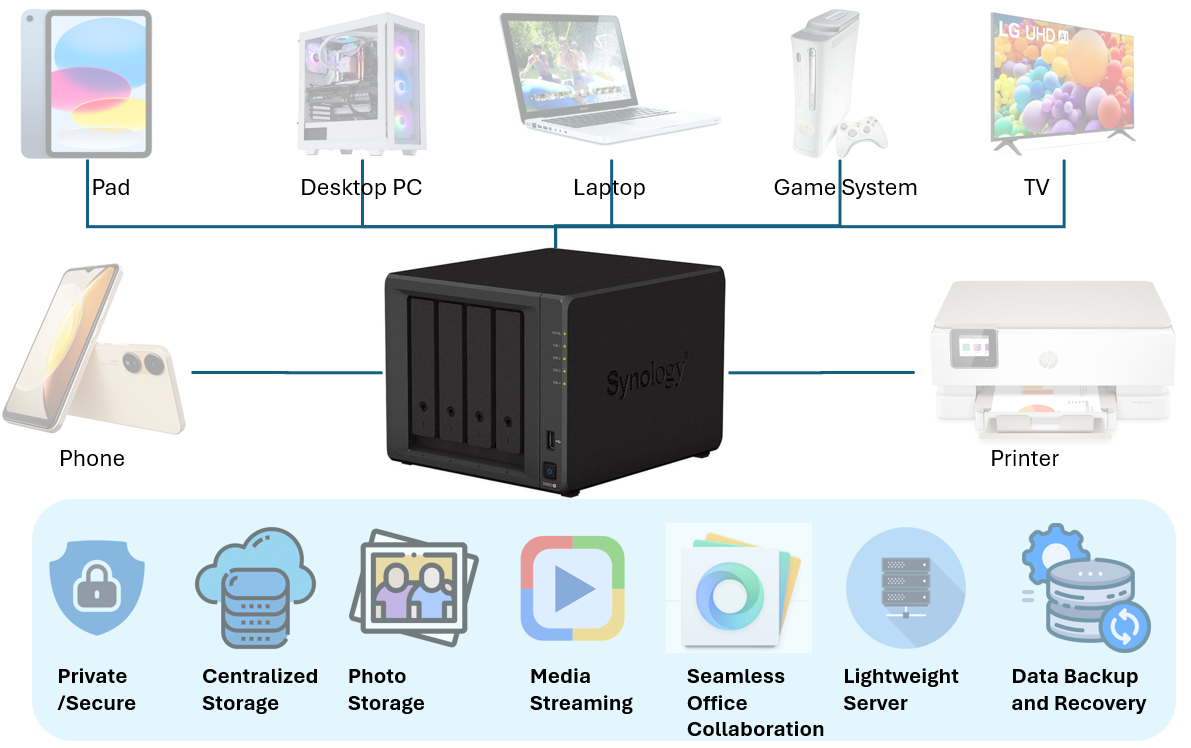
Centralized Storage:
NAS consolidates all your data into a single location, making it easier to organize, access, and back up files. -
Network Access:
Files stored on a NAS can be accessed from any device on the network, such as computers, smartphones, or tablets. Many NAS systems also support remote access over the internet. -
Redundancy and Data Protection:
Higher-end NAS devices often support RAID (Redundant Array of Independent Disks) configurations, ensuring data remains safe even if one of the drives fails. -
Scalability:
NAS devices can be expanded by adding more drives or upgrading existing ones, making them suitable for growing storage needs. -
Multi-User Collaboration:
A NAS enables multiple users to work on shared files and projects simultaneously, streamlining team collaboration. -
Media Streaming:
Many NAS systems come with built-in media servers, allowing you to stream videos, music, and photos to compatible devices.
Why Use a NAS?
1. Enhanced Data Security
NAS systems often include features like automated backups, encryption, and user access controls, ensuring your data is protected from loss, unauthorized access, and cyber threats.
2. Cost-Effective Storage Solution
For small businesses or home users, a NAS provides an affordable alternative to cloud storage subscriptions. Once purchased, there are no recurring fees beyond occasional maintenance or upgrades.
3. Simplified Backup and Recovery
With a NAS, you can schedule regular backups for all devices on your network. In the event of hardware failure or data loss, recovery is straightforward and centralized.
4. Remote Access and File Sharing
Many modern NAS devices support secure remote access, enabling you to retrieve or share files from anywhere in the world. This is particularly beneficial for remote workers and businesses with multiple locations.
5. Personal Cloud Alternative
NAS systems can serve as a private cloud, offering the convenience of cloud storage without handing over control of your data to third-party providers.
6. Ideal for Multimedia Libraries
If you have a large collection of photos, videos, or music, a NAS provides an efficient way to store and stream your media to devices like smart TVs, gaming consoles, or streaming boxes.
7. Improved Collaboration
For businesses, a NAS enables teams to collaborate more effectively by providing a shared space for documents, projects, and resources, ensuring everyone has access to the latest versions of files.
Conclusion
A NAS is more than just a storage device; it’s a powerful tool for managing, protecting, and accessing your data. Whether you’re a tech-savvy individual looking to create a personal cloud or a business aiming to improve data workflows, a NAS can provide the reliability, security, and flexibility you need. As data continues to grow in importance, investing in a NAS system is a smart choice for staying organized and prepared for the future.